







Devotional
The Hidden Cost of Staying Comfortable

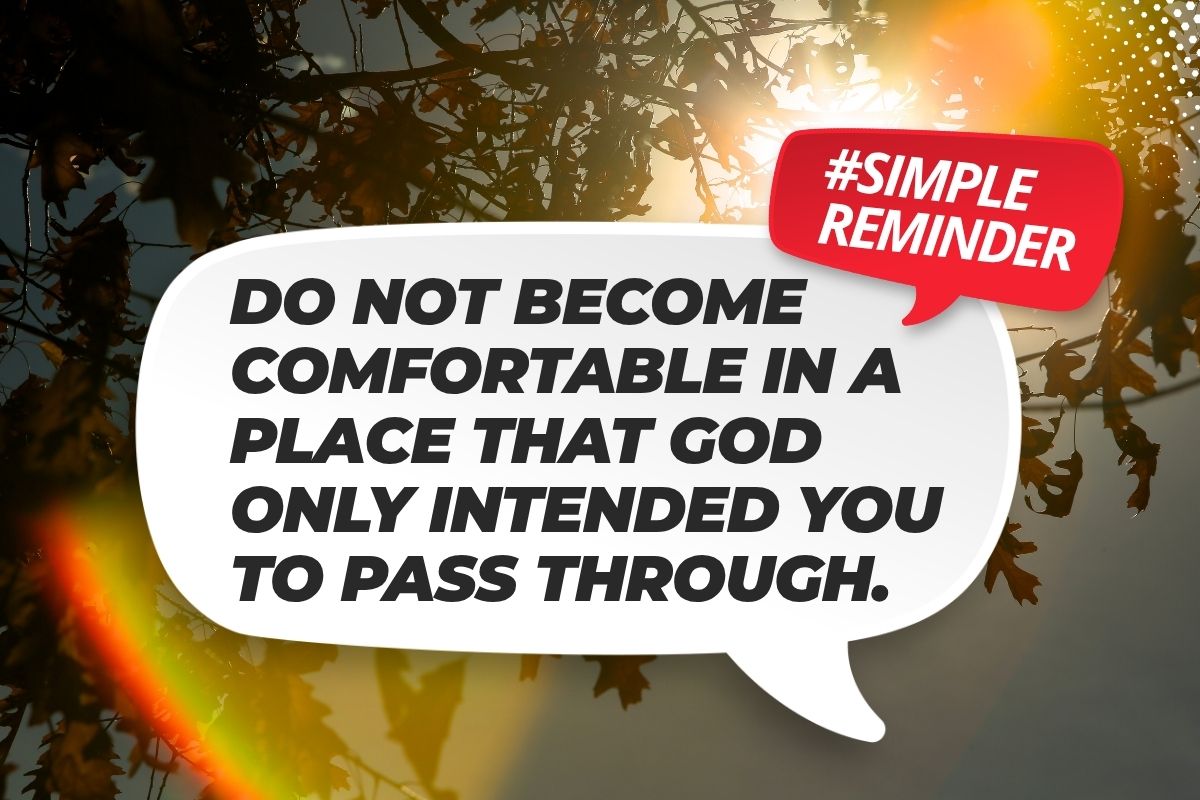
Sometimes, we are like birds that build their nests in places where they feel safe and protected. We carefully arrange our lives around familiar people, predictable routines and circumstances that give us a sense of control. Over time, we become so attached to these conditions that we begin to resist anything that threatens to change them. Yet there is something deeply revealing about a bird and its nest. The nest was never created to be the bird’s entire world. It is a place of shelter, rest and preparation, but the bird’s capacity extends far beyond its boundaries. In the same way, God may bring us into certain relationships, environments and opportunities to preserve us, strengthen us or prepare us for a season. But we must never confuse the place where God prepared us with the full extent of what He has called us to become. The danger begins when we make a permanent home out of something God intended to be a place of preparation. We may remain comfortable, yet gradually lose the willingness to exercise our faith, develop our abilities and accept greater responsibilities. And because nothing appears to be going wrong, we may not recognise that something important has stopped growing.
There is an important lesson in Deuteronomy 1:6–7. God told the Israelites that they had stayed long enough at Mount Horeb and instructed them to move forward. Consider the significance of that statement. Horeb was not an ungodly place. It was associated with God’s revelation, His covenant and His dealings with His people. Yet the fact that God had met them there did not mean they were supposed to remain there indefinitely. This teaches us that a place can carry genuine memories of God’s faithfulness and still cease to be where He wants us to remain. Some people struggle to move forward because they have mistaken the significance of yesterday’s encounters for permission to avoid tomorrow’s responsibilities. They keep returning to experiences that once strengthened their faith but are unwilling to act upon the truths those experiences were meant to teach them. God did not bring Israel to Horeb merely so they could remember how wonderful Horeb was. He was preparing them to continue towards the promise He had made. We must therefore ask ourselves whether the spiritual experiences we cherish are producing greater obedience or simply giving us reasons to remain where we feel comfortable.
One of the most subtle hindrances in life is the fear of losing what we have already gained. This fear can disguise itself as wisdom, caution or even spiritual contentment. We may refuse opportunities because they involve uncertainty, avoid necessary conversations because they could disturb our peace, or decline responsibilities because they demand more than we currently feel capable of giving. Yet Jesus taught in Matthew 25:14–30 that the servant who received one talent buried it because he was afraid. He did not squander it through careless living; he preserved it without putting it to work. When his master returned, the problem was not that the talent had disappeared, but that it had remained unproductive. This reveals an uncomfortable truth: we can be so concerned about protecting what God has entrusted to us that we fail to fulfil the purpose for which He entrusted it to us. Safety is not always faithfulness, and avoiding failure is not the same as bearing fruit. God does not expect reckless decisions, but He does call us to responsible obedience, even when that obedience requires courage.
Perhaps the most searching question is not whether we are comfortable, but what our comfort is costing us. A nest is a blessing when it provides shelter, but it becomes a limitation when the bird refuses to leave it. In the same way, a familiar position, routine or relationship may be a genuine gift from God, yet our attachment to it must never become stronger than our willingness to obey Him. When God calls us to grow, He is not necessarily asking us to abandon everything we love. Sometimes, He is simply asking us to stop allowing what we love to determine the boundaries of our obedience. The wings are not an accusation against the nest; they are evidence that the bird was created with possibilities beyond it. May we never become so grateful for the shelter that we forget the responsibility attached to the strength God has given us.
Related