








Devotional
God Will Sustain You

“For thus says the Lord GOD, the Holy One of Israel: ‘In returning and rest you shall be saved; In quietness and confidence shall be your strength.’” — Isaiah 30:15 (NKJV)
There is a spirit of fear gradually shaping the thinking and conversations of many people today. Everywhere you turn, the language is almost the same. Things are hard. Money is scarce. Nobody is helping anybody. Everyone is struggling. Even those who have something are afraid to release it because they do not know what tomorrow holds. People are beginning to measure their future by the condition of the economy and their confidence by what remains in their bank accounts. But I want you to understand something very important: The condition of the times is gradually becoming the condition of people’s minds. Many are no longer simply describing what they are experiencing; they are beginning to accept hardship as the final picture of what their lives can become. Their expectations are shrinking, their willingness to help others is weakening, and their conversations are becoming so full of fear that there is hardly any room left for the goodness of God.
Beloved, there is a difference between living through a difficult season and allowing that season to live inside you. A person may be surrounded by scarcity without developing a scarcity mentality. You may have little in your hands and still carry great confidence in God. One of the greatest truths a believer must hold firmly to in difficult times is that God’s provision is not controlled by the condition of the economy. God is not unaware of inflation, unemployment, unpaid bills or the difficulties families are facing. He sees them all. But His ability to sustain His children does not rise and fall with the strength of a nation’s economy. Consider Isaac in Genesis 26:1–14. There was a famine in the land, yet God instructed Isaac not to go down to Egypt. Human reasoning would have suggested that he leave immediately for a place with better opportunities. But Isaac had something more important than favourable conditions: he had a word from God. The Bible tells us that Isaac planted crops in that land and received a hundredfold harvest because the Lord blessed him. Notice something important. God did not first remove the famine before blessing Isaac. He demonstrated His faithfulness to Isaac in the very place where famine existed. The land was difficult, but the covenant was still alive. The circumstances were unfavourable, but God’s Word had not lost its power. Isaac’s prosperity was not simply the result of planting; it was the blessing of God upon his obedience. This is where many believers need to grow. We sometimes want God to bless our decisions without first seeking His direction. There are opportunities you may not recognise until you pray. There are decisions that may appear financially attractive but are not right for your season. There are relationships God may be directing you towards, ideas He may be developing in your mind and responsibilities He may be asking you to fulfil. The question is not only, “Lord, when will things become better?” It is also, “Lord, what are You teaching me, and what are You asking me to do in this season?” Do not become so occupied with the famine that you stop listening for divine instruction.
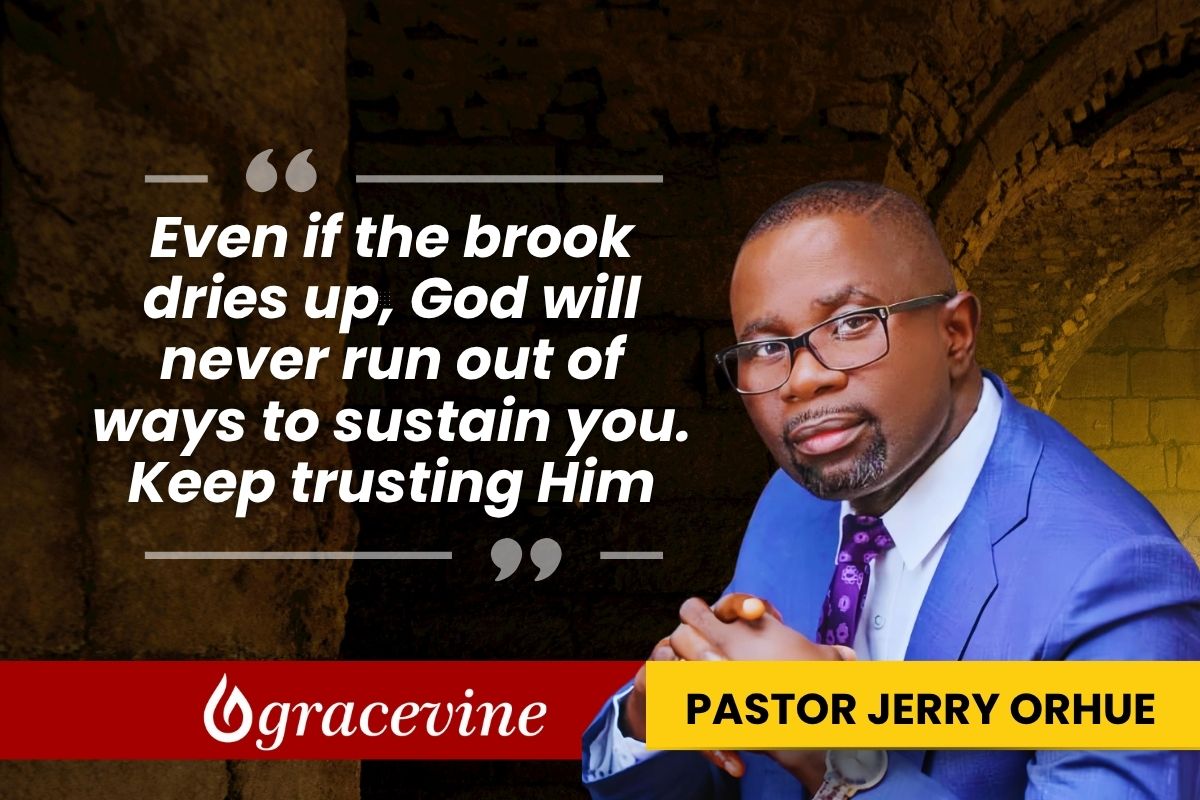
I believe this is a time for God’s people to become more discerning, more prayerful, more courageous and more conscious of His presence. In 1 Kings 17:2–16, God instructed Elijah to go to the Brook Cherith, where ravens would bring him food. Think about this unusual arrangement. Ravens were not creatures anyone would ordinarily depend upon to supply meals. Yet God chose them as His means of provision. Later, when the brook dried up, God sent Elijah to a widow in Zarephath. Interestingly, this widow was also experiencing severe lack. She had only enough flour and oil for what she believed would be her family’s final meal. Yet God had already prepared an encounter that would sustain both the prophet and the widow’s household. There are two powerful lessons here. First, God’s provision is not limited to the channels you already know. He can use an unexpected relationship, a forgotten skill, a timely recommendation, a new assignment, an unusual opportunity or a person you never imagined would become part of your answer. Second, the drying up of a familiar source does not mean the end of God’s provision. The brook dried up, but God had not abandoned Elijah. Beloved, there are people who are still mourning the loss of a brook while God is directing their attention towards Zarephath. Perhaps a particular source of income is no longer sufficient. Perhaps a business arrangement has ended, a contract has not been renewed or an opportunity you depended upon has disappeared. It is natural to feel concerned, but do not allow disappointment to make you deaf to God’s next instruction.
This is our season of Higher Heights, and I believe God is calling us to rise above the fear and limitations that have shaped the thinking of many. We must come to a place where the condition of the economy no longer determines the strength of our faith, where scarcity does not silence our expectation, and where difficult circumstances do not make us forget who our Father is. Do not allow what is happening around you to weaken your consciousness of the God who is with you. The Lord who sustained His people in the wilderness, blessed Isaac in a time of famine and provided for Elijah when the brook dried up has not changed. If He has not changed, then our confidence in His faithfulness must not change. “For I am the LORD, I do not change.” — Malachi 3:6 (NKJV)
Remain blessed,
Rev. Jerry Orhue
Senior Pastor, Gracevine Chapel
www.gracevinechapel.org
Related