Sports
Super Eagles Fight Back To Defeat Madagascar 2-1

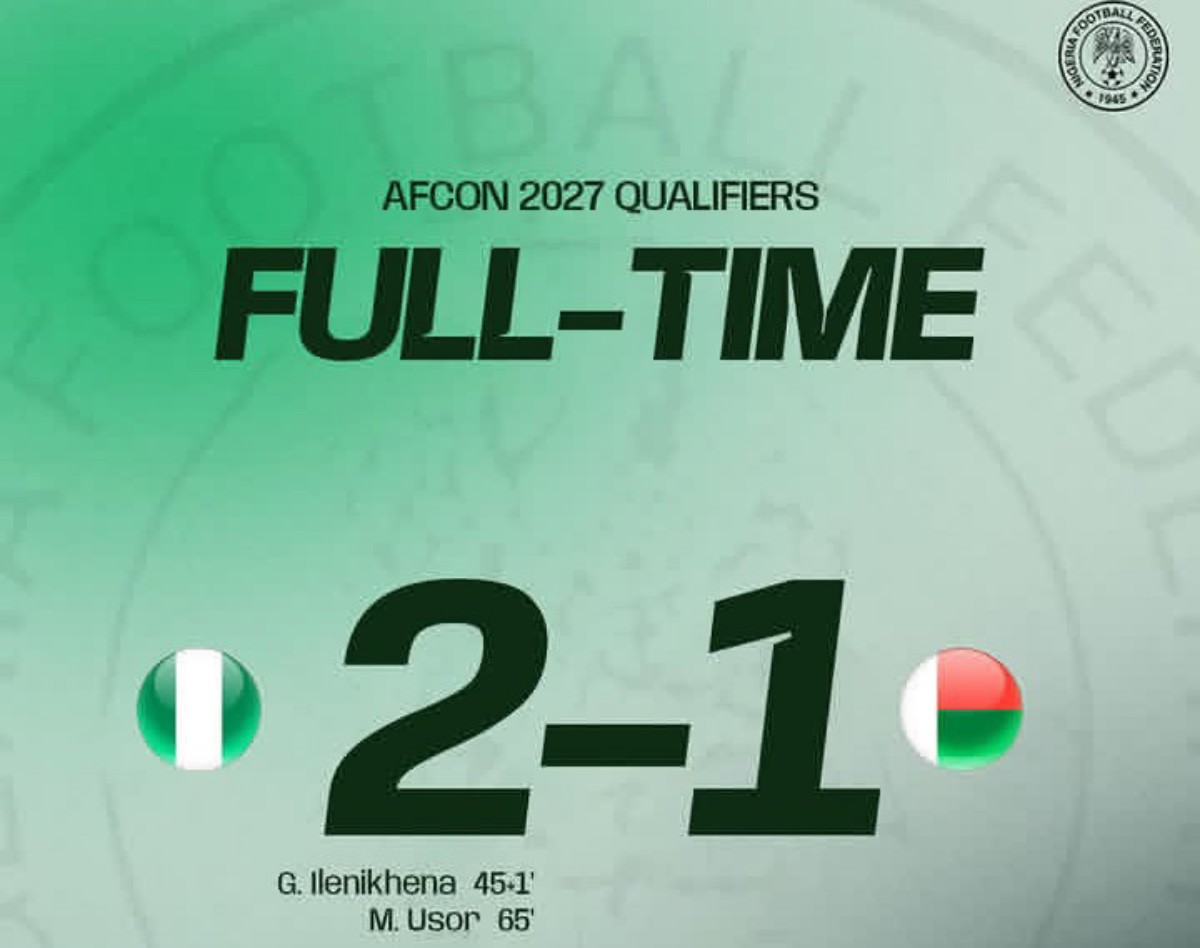
Nigeria’s Super Eagles defeated Madagascar 2-1 in Uyo on Friday to start their 2027 Africa Cup of Nations qualifying campaign.
E. Kari, who converted a pass from R. Ponti, gave Madagascar the lead in the sixteenth minute, shocking the home crowd at the Godswill Akpabio International Stadium.
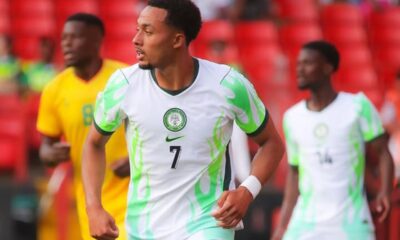
Nigeria responded before half-time, with debutant George Ilenikhena restoring parity after combining with Alex Iwobi to finish off the move.
Another rookie, Moses Usor, scored in the second half to give Eric Chelle’s team a 2-1 lead, completing the Super Eagles’ comeback.
Nigeria held on to secure all three points and make a winning start to their Group L campaign.
Tanzania, one of the group’s co-hosts, already has an automatic spot at the 2027 AFCON finals, so the outcome is especially important.
As a result, only Nigeria, Madagascar, and Guinea-Bissau’s top-ranked team will receive the group’s final qualification ticket.
Madagascar will play Tanzania on Tuesday, while the Super Eagles will travel to Guinea-Bissau for their second Group L match.
Victor Osimhen, a striker for Galatasaray, was sidelined for the first two qualifiers due to a muscle injury, so Nigeria was without him for the game.
Congratulations to the Super Eagles on a hard-fought 2-1 victory over Madagascar. Their determination and fighting spirit made the difference—best wishes to the team as they continue their AFCON qualifying campaign!
Related