



News
Ogunleye: NNPC Activates Pathways To Make Nigeria Global Gas Hub

The Nigerian National Petroleum Company Limited (NNPC) has reaffirmed its commitment to activate multiple pathways aimed at transforming Nigeria into a global gas hub.
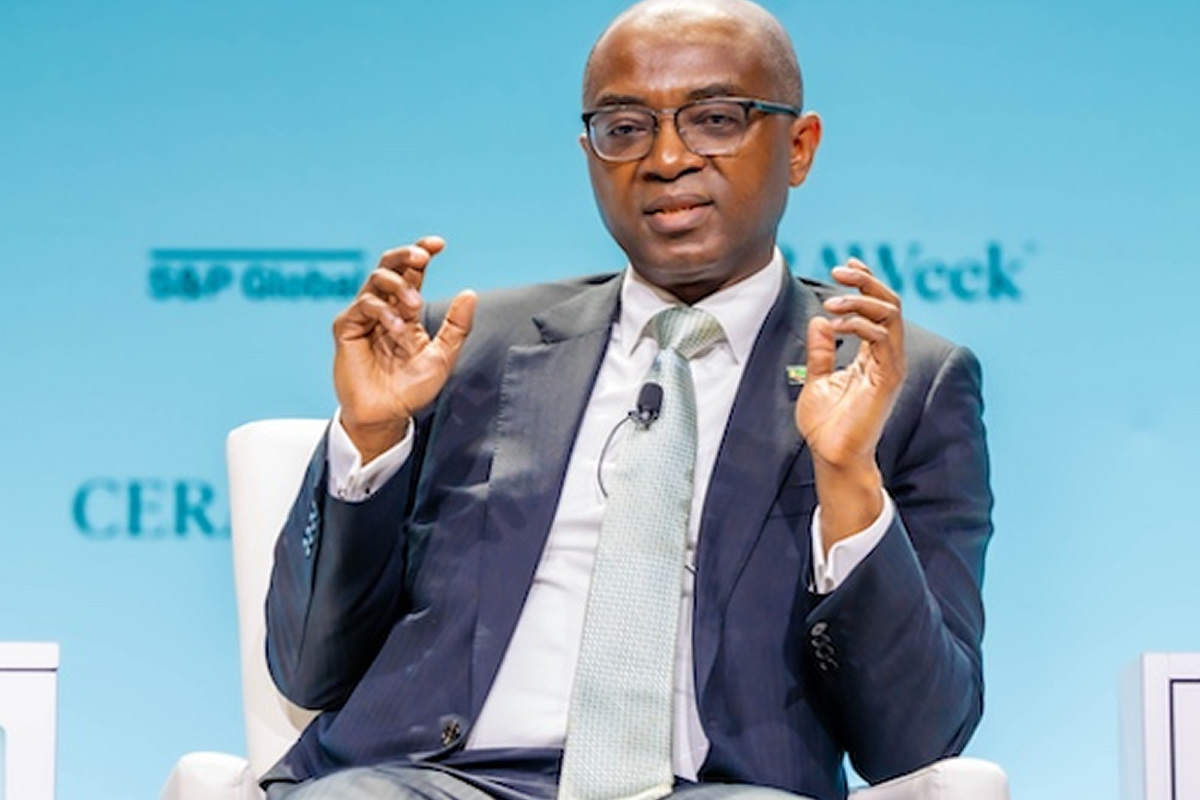
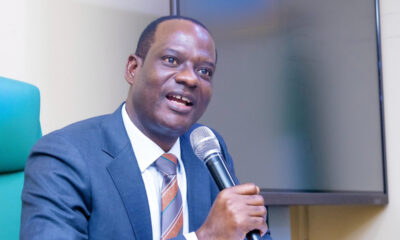
The Executive Vice President, Gas, Power & New Energy, NNPC, Mr. Olalekan Ogunleye disclosed this on Monday while speaking at the 2026 Gas Technology & Exhibition Conference (GASTECH), taking place in Bangkok, Thailand, according to a statement by the company’s Chief Corporate Communications Officer, Andy Odeh.
Ogunleye, who spoke on a panel themed: “The New LNG Order: Leadership Strategies for Energy Security and Growth” said as geopolitics, conflict and other factors continue to affect global energy supply and demand, Nigeria is leveraging its over 215 trillion cubic feet (tcf) of proven gas reserves to power domestic industrialisation and expand export reach.
“Gas development and monetisation from Nigeria’s standpoint is a purely commercial play. NNPC Ltd. is implementing a Gas Master Plan (GMP) engineered as a gap-to-potential tool to move Nigeria from a 215tcf reserves position to above 600tcf,” he added.
He explained that the company’s focus was hinged on reinforcing coordination, anchored on the Petroleum Industry Act (PIA), Decade of Gas Framework and the GMP, with the near-term target to ramp up national production of gas to 10 billion standard cubic feet per day (Bcf/d) by 2027 and 12 Bcf/d by 2030.
Ogunleye observed that Nigeria was already a reliable global supplier of gas on a major expansion drive, citing key LNG projects such as Trains 1-6 which produce 22 million tonnes per annum (MTPA) and has exported over 6,000 LNG cargoes since 1999, as well as Train 7 which is due for completion in 2027.
He said Nigeria’s geographical advantage (well-positioned for the Atlantic Basin and Asian markets) has placed the country as a strategic supplier to global markets, an advantage he said is complemented by Nigeria’s substantial gas resource base and a national focus on gas development.
He said Nigeria’s domestic gas utilisation and gas for export are not mutually exclusive, as the country has adopted a dual pathway which leverages exports for foreign exchange earnings while advancing domestic gas utilisation to create job opportunities, deepen energy security, and economic wellbeing.
Ogunleye said Nigeria has de-risked new LNG projects through a robust legal and regulatory framework supported by attractive fiscal incentives.
“With continued efforts towards stable security, competitive gas pricing and assured gas supply, there is no better time for investors and financiers to confidently participate in the development of Nigeria’s LNG projects,” Ogunleye concluded.
Also at the event, the Minister of State for Petroleum Resources (Gas), Ekperikpe Ekpo, said that Nigeria was working to increase gas production and develop infrastructure required to move more of its vast reserves to domestic, regional and international markets.
But Ekpo acknowledged that the country’s large gas reserves alone could not unlock the opportunity created by disruptions to global supplies.
“Resources alone without provision of infrastructure, technology and financing cannot take us anywhere,” the minister said.
According to him, the government is supporting investment in gas infrastructure, including through the gas infrastructure fund provided for under the Petroleum Industry Act (PIA), to facilitate the transportation of produced gas to markets across Nigeria and beyond.
Ekpo said Nigeria was already supplying gas to several countries in the region, including Ghana and Togo, while pursuing additional export opportunities.
“We are engaging with the Trans-Saharan Gas Pipeline to supply gas to Morocco, which ultimately will get to the international market. We are in negotiation with Algeria and Equatorial Guinea,” he said.
The minister identified the Obiafu-Obrikom-Oben (OB3) and Ajaokuta-Kaduna-Kano (AKK) gas pipelines as critical infrastructure being developed to connect gas-producing areas with markets across the country.
He said the projects would strengthen domestic supply while creating the infrastructure required to support regional exports.
Ekpo also pointed to the Decade of Gas initiative, launched in 2021, saying about 20 projects had been identified to increase gas production sufficiently to meet domestic and regional demand, with surplus volumes available for export. “We are progressing to catch up with the demands of our country and, of course, with the regional demands,” he said.
He stressed, however, that domestic consumers would remain the priority, noting that the government had established a domestic delivery obligation requiring producers to meet local demand before exporting surplus gas.
The minister said the government had also granted tax waivers for gas-related equipment as part of efforts to encourage investment in the sector.
Also speaking at the conference, Oman’s Minister of Energy and Minerals, Salim bin Nasser Al Auh, said the current global energy supply challenge was not caused by a shortage of oil and gas resources or technology, but by the difficulty of moving supplies from production centres to consumers.
“The resources are there, we know where they are. The technology is available to go after these resources. We know how to produce it, how to process it, how to transport it, how to liquefy it and how to get it to the end customer,” he said.
“What we are struggling with is the ability to do the last piece, which is to get it out from where it’s produced, to where it’s needed the most,” he pointed out.
Al Auh said the Strait of Hormuz disruption had exposed the vulnerability of global energy supply chains and underscored the need for countries to diversify their export routes and sources of supply.
He said the current disruption could stabilise in the medium term, but urged energy-producing countries to develop alternative routes to reduce their exposure to strategic chokepoints.
Speaking earlier at the opening ceremony, Thailand’s Prime Minister, Anutin Charnvirakul, warned that disruptions in global energy supplies were increasing household expenses, calling for greater investment in the sector.
GASTECH is the world’s largest exhibition and conference focused on natural gas, LNG, hydrogen and low-carbon solutions. Now in its 54th edition, the conference brings together about 50,000 participants from over 150 countries ranging from energy experts, CEOs, policymakers, investors and technology leaders to discuss the future of energy security, LNG supply, infrastructure investment and decarbonisation.
Related