




Latest News
UNICEF Unveils New Five-Year Child Development Plan For Kano, Jigawa, Katsina

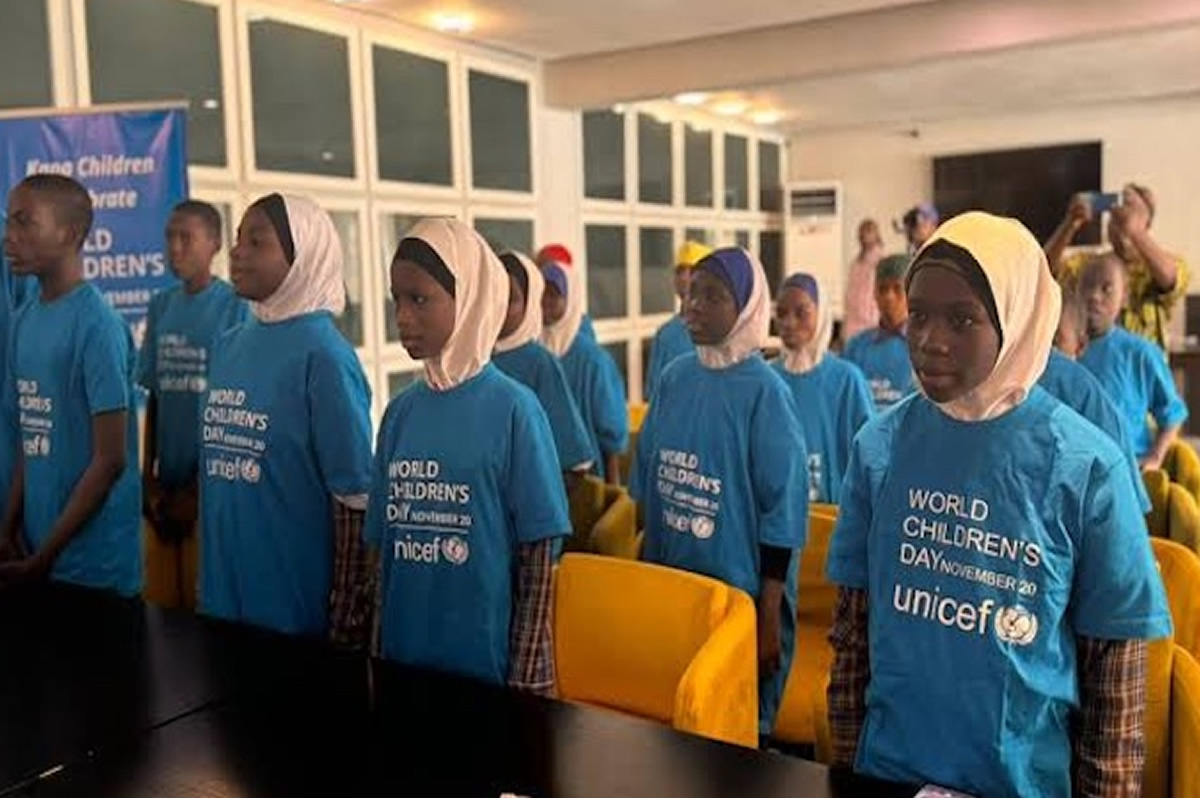
United Nations Children’s Fund (UNICEF) has begun consultation with government and partners in Kano, Jigawa, and Katsina states to shape the Federal Government of Nigeria/UNICEF Country Programme for 2028–2032.
Chief of UNICEF Kano Field Office, Shafeeq Ur-Rehman, said on Wednesday in Kano that the new programme must address climate shocks, insecurity, urbanisation, and other challenges affecting children.
“We are here to listen, to learn and to co-create – not to present predetermined solutions,” he said at the consultation in Kano.
Ur-Rehman said the plan must be government-led, evidence-based, and integrated across education, health, nutrition, WASH, child protection, and social protection.
He added that the consultation aimed to identify the most critical child rights deprivations in the three states and develop scalable solutions for the next five years.
He thanked the governments for their commitment to improving child welfare in the North-west.
Speaking on behalf of Kano State Government, and the two partners, the acting permanent secretary in the ministry of budget and planning, Alhaji Abdulmumini Ajumawa, extended appreciation to UNICEF for its longstanding partnership and support in advancing the well-being of children and vulnerable populations.
Ajumawa said UNICEF had remained a trusted partner in strengthening systems across health, nutrition, education, WASH, child protection, social policy and emergency response.
He stated that the impact of the collaboration was evident in the progress recorded across many development indicators, though significant challenges remained.
Ajumawa stated, “The North-west region continues to face challenges, including child malnutrition, learning poverty, limited access to quality healthcare, inadequate water and sanitation, child protection concerns, climate vulnerabilities and socio-economic inequalities.”
While each state had its unique context, Ajumawa said the challenges cut across borders and required coordinated, multi-sectoral and people-centredresponses. He urged participants to identify practical, innovative and sustainable solutions that would respond to the realities in their states and communities.
The permanent secretary stressed the need to align partner support with government priorities and existing development frameworks to ensure national and state ownership and stronger institutional capacity.
Related