Latest News
Oyedele Says Nigeria’s GDP Growth Will Exceed 4% In 2026 As NEC Targets High Interest Rates

Taiwo Oyedele says Nigeria’s economy has stabilised, with GDP growth projected above four per cent as NEC moves to lower borrowing costs.
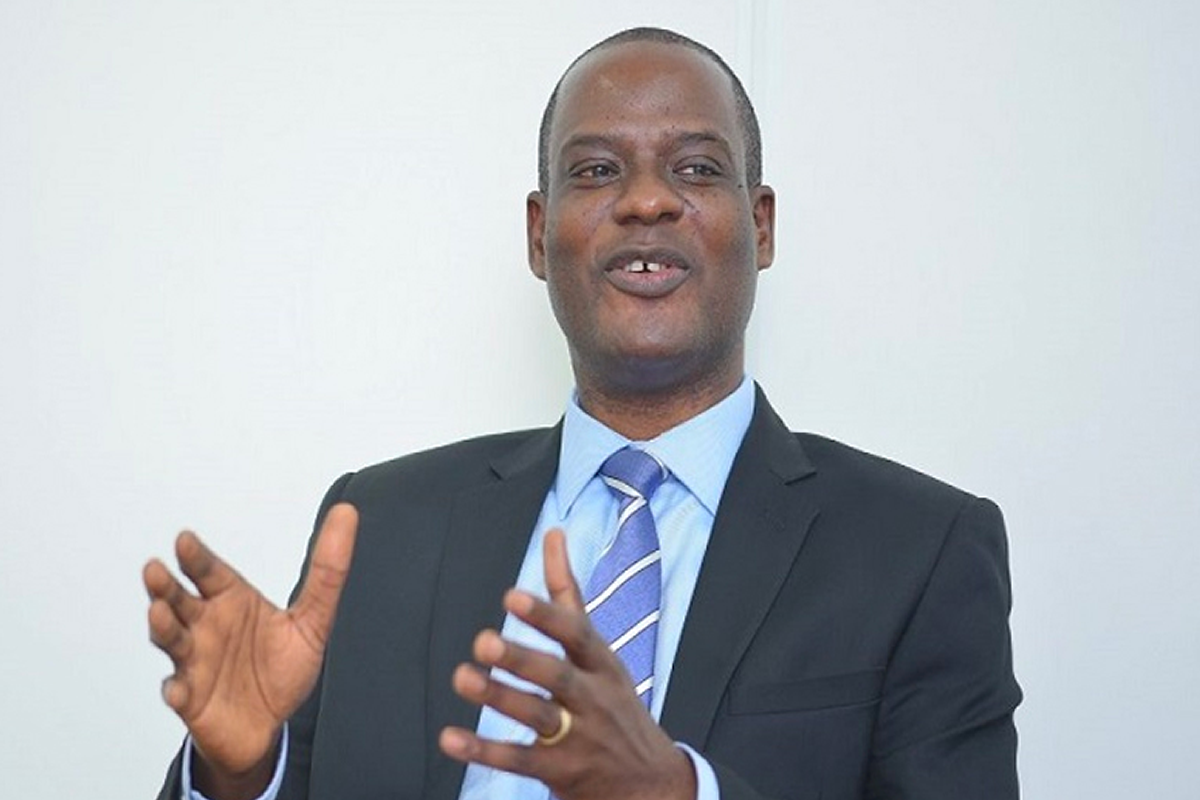
Minister of Finance and Coordinating Minister of the Economy, Taiwo Oyedele, has said Nigeria’s economy has stabilised and projected that Gross Domestic Product growth will exceed four per cent by the end of 2026.
Speaking with journalists after the monthly meeting of the National Economic Council at the State House, Abuja, on Thursday, Oyedele said the country had achieved significant macroeconomic stability but now faced the challenge of translating those gains into shared prosperity.
“Nigeria’s economy has stabilised, and the task ahead of us now is to convert stability to shared prosperity,” he said.
According to the minister, real GDP growth stood at 3.89 per cent in the first quarter of 2026, compared with 3.13 per cent a year earlier, while full-year growth was projected to exceed four per cent.
Oyedele also said headline inflation declined to 15.43 per cent at the end of July from 24.94 per cent a year earlier, although food inflation remained elevated at 20.31 per cent, compared with 26.2 per cent in the corresponding period last year.
He said Nigeria’s external reserves had risen to $51.96 billion, their highest level since January 2009 and 38 per cent higher year-on-year.
The minister added that the naira had appreciated by 13.5 per cent year-on-year by the end of the first half of 2026, with the exchange rate now below N1,400 to the dollar and showing relative stability.
Oyedele said net Federation Account Allocation Committee revenues rose by 44 per cent, from N15.2 trillion in 2024 to N21.9 trillion in 2025, and were projected to increase by at least another 50 per cent in 2026.
He also reported that Nigeria’s trade surplus had nearly doubled from N17.7 trillion in 2025 to N34.7 trillion by the first quarter of 2026.
According to him, total public debt remained below 37 per cent of GDP at N159.28 trillion, while the debt-service-to-revenue ratio had declined from nearly 100 per cent in 2022 to below 60 per cent in 2025.
Oyedele said improvements in the economy had also received international recognition, citing upgrades of Nigeria’s sovereign credit ratings by Fitch, Moody’s and S&P between April 2025 and May 2026.
He described the coordinated upgrades by the three major rating agencies as the first such alignment in more than a decade.
The minister also said Nigeria exited the Financial Action Task Force grey list in October 2025 and the European Union’s Anti-Money Laundering and Countering Financing of Terrorism deficiency list in January 2026, developments he said would reduce the cost and friction associated with cross-border capital flows.
He added that the spread between United States Treasury bonds and Nigeria’s Eurobonds had narrowed to a historic low of less than 200 basis points, while the Nigerian capital market had emerged among the world’s best performers, with market capitalisation almost doubling within one year.
Oyedele described the recent reclassification of Nigeria by FTSE Russell from unclassified status to frontier market status as another major positive development capable of opening the country to a broader pool of global institutional capital.
Explaining the significance, he said many international institutional investors are restricted by investment classifications and cannot deploy capital in countries outside approved categories.
“So when FTSE Russell says they’ve now reclassified Nigeria to frontier markets, that automatically makes us eligible for investment. Or put differently, we become investable to many institutional investors globally,” he said.
Oyedele said the Nigerian capital market had returned more than 60 per cent in dollar terms over the past year, despite a recent correction, adding that the reclassification could attract both foreign portfolio and foreign direct investment.
He also disclosed that NEC had directed the consideration of fiscal and monetary policy measures to moderate high interest rates, particularly for priority sectors of the economy.
The Council, chaired by Vice-President Kashim Shettima, expressed concern that prevailing lending rates remained a major constraint to businesses and the real sector despite improvements in key macroeconomic indicators.
“Council expressed concern about the high rates of interest, particularly for businesses, and directed that we look at fiscal and monetary policy measures to moderate these interest rates,” Oyedele said.
According to him, agriculture, energy, manufacturing, mining and the digital economy were identified as priority sectors requiring greater attention to accelerate economic growth and tackle poverty and inequality.
NEC was particularly concerned about sectors employing the majority of Nigerians, with Oyedele saying 81.4 per cent of the population worked in agriculture and non-tradable services.
The minister said the Council’s position was that faster growth in sectors where most Nigerians earn their livelihoods would have a more direct impact on poverty reduction and narrowing inequality.
Also briefing journalists, Akwa Ibom State Governor Umo Eno disclosed the balances in key Federation accounts as of August 26, 2026.
He put the Excess Crude Account balance at $535,823, the Stabilisation Account at N90.95 billion and the Natural Resources Account at N256.4 billion.
Eno said the figures presented by the Finance Minister showed an improvement over the corresponding period last year and reinforced NEC’s assessment that the economy was stabilising, although more work remained.
Borno State Governor Babagana Zulum said NEC also considered a presentation by the Minister of Industry, Trade and Investment on the forthcoming Creative Africa Nexus Weekend, CANEX WKND 2026, and the Intra-African Trade Fair scheduled for Lagos in November.
According to him, the Council endorsed the Federal Government’s request for active participation by all state governments, agreeing that participation should be mandatory because the events would provide a platform to showcase Made-in-Nigeria products and the country’s growing local production capacity.
Zulum said Nigeria had recorded considerable growth in local content and domestic production over the years but had not sufficiently showcased those gains to international markets.
Ondo State Governor Lucky Aiyedatiwa also disclosed that NEC received an update on the rehabilitation of 13 police training institutions across the country.
He said contracts had been awarded for the rehabilitation works, with about 80 per cent of contractors already receiving their award letters.
According to him, the rehabilitation was expected to be completed within three weeks to prepare the institutions for the commencement of police training programmes, while efforts were being intensified to secure the release of funds for contractors to mobilise to site.
Aiyedatiwa said NEC considered improved police training critical to the fight against insecurity, irrespective of ongoing discussions around state policing.
Related