




Latest News
Obasanjo: Corruption Is Nigeria’s Greatest Threat To Development

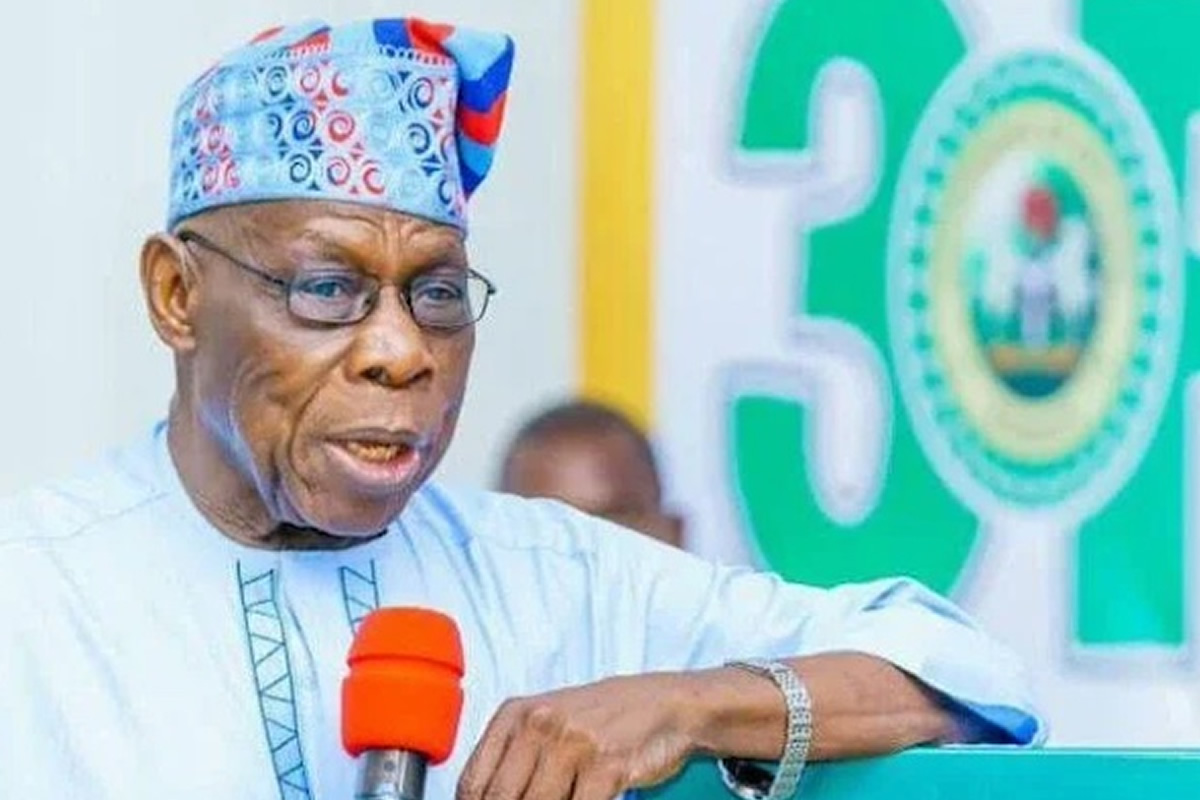
Former President Olusegun Obasanjo, on Monday, warned that corruption was making poor Nigerians poorer, describing the menace as a major threat to Nigeria’s development.
Obasanjo called for stronger institutions and effective accountability for those who diverted public resources.
He made the assertions in Lagos while chairing the public presentation of a three-volume book, Unexplained Wealth: A Trilogy of Nigerian Financial Law, written by Senior Advocate of Nigeria, Dr Wahab Shittu.
The former president described corruption as “development’s greatest, deadly peril”, while characterising unexplained wealth as “anti-social, anti-development and anti-progress”.
According to him, the consequences of corruption are disproportionately borne by the most vulnerable members of society.
Obasanjo said, “Those who suffer most in the corrupt society are the poor. And it makes them poorer.”
He stressed that Nigeria could not achieve meaningful development while corruption continued to thrive, recalling efforts during his administration to strengthen the country’s anti-corruption framework through the establishment and strengthening of institutions, including the Independent Corrupt Practices and Other Related Offences Commission (ICPC) and Economic and Financial Crimes Commission (EFCC).
Equally speaking, Emir of Kano, Muhammadu Sanusi II, said legal reforms aimed at tackling unexplained wealth would have limited impact unless accompanied by corresponding political and judicial reforms.
Sanusi warned that the effectiveness of anti-corruption legislation ultimately depended on the integrity and impartiality of the institutions responsible for investigating, prosecuting, and adjudicating alleged cases of illicit enrichment.
He expressed concern that individuals with unexplained wealth could escape scrutiny where they enjoyed political protection, while others could face enforcement action because they lacked such protection.
Sanusi said, “We live in a society where if you have unexplained wealth and if you have the right political cover, nobody asks you. And if you are on the wrong side of politics, you get into trouble.”
He urged authorities to ensure that anti-corruption laws were applied consistently and impartially, rather than being used selectively against individuals because of their political affiliations or positions.
Representing former Vice President Yemi Osinbajo, his former Chief of Staff, Ade Ipaye, said Nigeria needed a transparent and constitutionally sound framework for recovering assets suspected to have been stolen, without undermining the rights of citizens who had legitimately acquired their wealth.
Osinbajo, in a message delivered at the event, said the immediate priority should be the creation of a system capable of recovering stolen assets while protecting lawfully acquired property.
“What we need now most urgently is a clear, fair, and constitutionally sound approach that can recover what was stolen without threatening what was lawfully earned,” he said.
The book reviewer, Professor Olanrewaju Fagbohun, SAN, also cautioned against treating the absence of conventional documentation as conclusive evidence that wealth was criminally acquired.
Fagbohun said enforcement of unexplained wealth laws should take into account the realities of Nigeria’s informal economy, where legitimate financial transactions and business activities might not always generate the type of conventional documentary trail associated with formal-sector transactions.
Shittu, author of the three-volume work, said the purpose of the publication was to contribute to the development of a legal and institutional framework capable of distinguishing legitimate wealth from illicit enrichment.
The senior lawyer stressed the importance of reliable records in establishing the legitimacy or otherwise of assets and financial transactions.
Without adequate records, he warned, the country risked creating a system in which citizens could be suspected of wrongdoing without sufficient evidence to prove criminal conduct.
He said becoming wealthy was not in itself an offence, stressing that the crucial issue is whether the wealth has been acquired legitimately.
Shittu said, “Making wealth, becoming rich, is not a crime. It’s not a crime at all. But becoming rich and making wealth dubiously is a crime.”
He explained that his work sought to address the legal and practical challenges associated with unexplained wealth and provide a framework through which legitimate wealth could be distinguished from assets acquired through corruption and other unlawful means.
According to him, reliable financial records would be central to achieving that objective.
He warned that in the absence of credible documentation and an effective legal framework, anti-corruption enforcement could degenerate into suspicion without proof.
Related