



News
Nigeria’s EV Ambitions Face Reality Of Unreliable Electricity Supply

Nigeria’s push to accelerate electric vehicle adoption is gaining momentum through tax incentives and local assembly initiatives, but chronic electricity shortages continue to pose a major obstacle to the country’s clean transport ambitions.
Government data reviewed showed that authorities approved tax waivers for nearly 4,000 electric vehicles in the first half of this year, marking the first approvals under a new programme designed to encourage cleaner transportation.
The initiative is part of broader efforts to significantly increase electric vehicle adoption in Nigeria, whose 2022 Energy Transition Plan projects that electric vehicles will account for 60% of the country’s vehicle fleet by 2050.
The target represents a sharp increase from current adoption levels. Although official figures are unavailable, dealers estimate that electric vehicles account for less than 1% of Nigeria’s total vehicle fleet, equivalent to only a few tens of thousands of vehicles on the roads.
The government has introduced several incentives to support the sector. Electric vehicles were exempted from value-added tax in 2024, while import duties were reduced to zero this year from 5%.
Rising petrol prices following the removal of the fuel subsidy in 2023 have also increased interest in electric motorcycles, cars and other forms of alternative mobility.
However, the viability of Nigeria’s electric vehicle market remains closely linked to the country’s struggling power sector.
Nigeria’s electricity grid generates around 4,000 megawatts for a population of more than 200 million people, leaving the country with one of the lowest levels of per-capita electricity availability among major economies.
As a result, households and businesses rely heavily on diesel and petrol-powered generators, a dependence that has also extended into the electric vehicle industry.
Charging stations, dealerships and battery-swapping operators frequently turn to generators when grid electricity is unavailable, undermining some of the environmental benefits of electric mobility.
“If we wait for electricity to become perfect before adopting EVs, the rest of the world will leave us behind,” said Bolanle Boboye, an executive at Saglev, Nigeria’s first electric vehicle manufacturer, which is affiliated with Chinese automaker Dongfeng.
“Even when EVs are charged using diesel-generated electricity, they can still help reduce overall emissions.”
Public charging infrastructure remains limited. About 48 public electric vehicle charging stations were available in Nigeria as of late 2025, according to a policy brief seen by Reuters, with most concentrated in Lagos and Abuja.
By comparison, South Africa had more than 500 public charging stations.
The policy brief said Nigeria’s Energy Transition Plan had projected around 60 charging stations by 2030, underscoring the early stage of the industry and the infrastructure gap confronting its expansion.
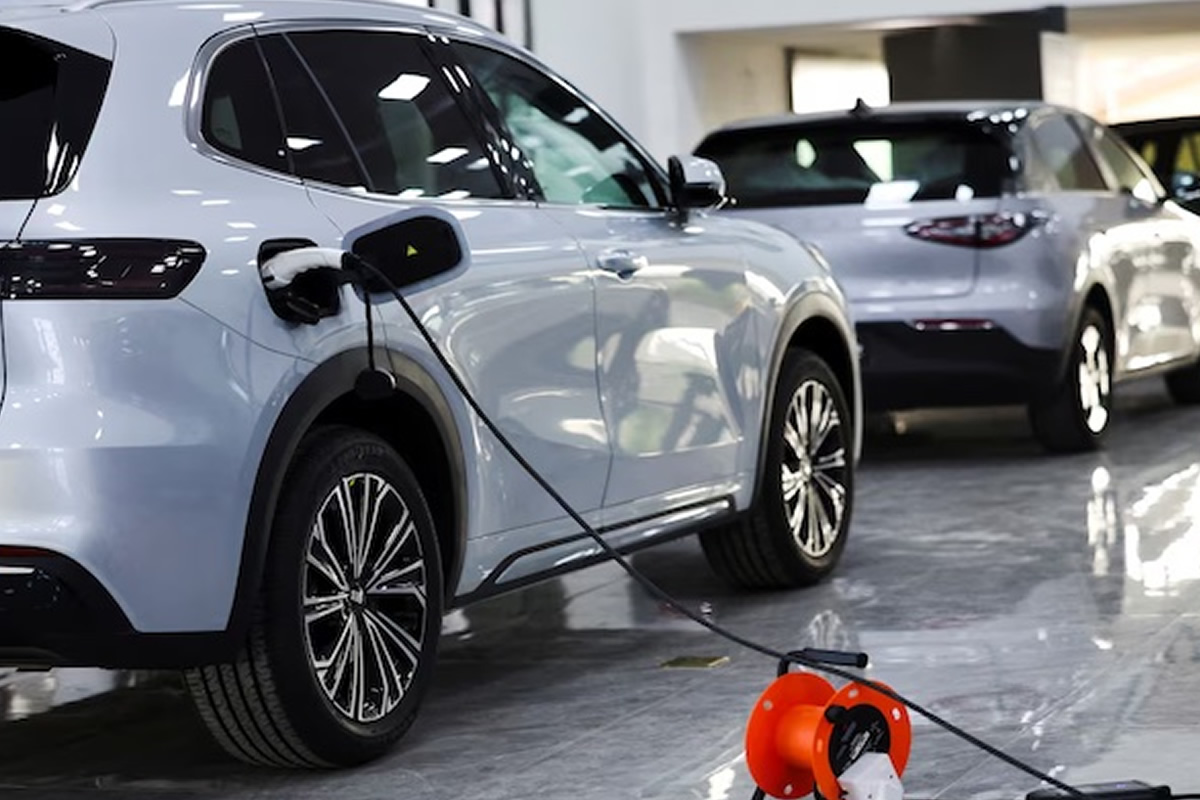
With public chargers scarce, many electric vehicle owners rely on portable charging cables connected directly to household power outlets.
Unreliable electricity is also influencing the types of vehicles gaining traction in the market.
Boboye said sales of extended-range electric vehicles — which combine battery power with a small fuel-powered range extender — had doubled this year, as consumers seek to overcome charging limitations.
Chinese automakers are also adapting their strategies to Nigeria’s power challenges. Brands including BYD and Geely are expanding their presence with electric and hybrid models that industry executives say are better suited to unreliable electricity supply.
Tim Motors, Geely’s local partner, said new-energy vehicles, including electric and hybrid models, currently account for about 2% of its vehicle sales in Nigeria.
“Nigeria is one of the largest car markets in Africa, but it is dominated by second-hand vehicles. We want to change that,” said Leon Zhan, head of Tim Motors.
Analysts say electric motorcycles and three-wheelers may provide the most immediate opportunity for electrification in Nigeria, where lower running costs can deliver direct savings for households and commercial operators.
Nigeria has more than 15 million motorcycles on its roads, while riders have been among those most affected by rising fuel costs since the petrol subsidy was removed.
Stanley Nwankwo, co-founder of electric mobility startup Donda X Limited, said electric motorcycles and tricycles could reduce operating costs by about two-thirds compared with petrol-powered alternatives.
Mobility startups MAX and Spiro are also investing in battery-swapping networks, allowing riders to exchange depleted batteries within minutes instead of waiting for them to recharge.
The approach offers a practical solution to Nigeria’s electricity constraints by reducing riders’ dependence on conventional charging infrastructure.
For Nigeria, the growth of electric mobility may therefore depend not only on tax incentives and vehicle imports, but also on the ability to build reliable charging networks and address the country’s longstanding electricity supply challenges.
Related