


News
IPOB Lawyer Urges Tinubu To Review South-East Detainees’ Cases

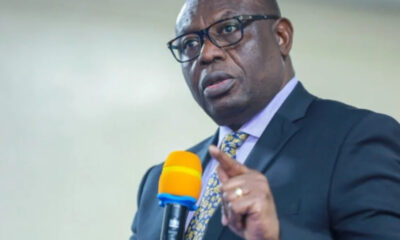
A legal practitioner, Ifeanyi Ejiofor is calling on President Bola Tinubu to consider directing the Attorney-General of the Federation and Minister of Justice, Lateef Fagbemi (SAN), to undertake a comprehensive legal review of the cases involving detainees from the South-East who have remained in prolonged custody under circumstances that continue to attract serious legal and humanitarian concerns.
He also raised concerns that many detainees from from the South East extraction remain in custody after years of incarceration, development that has continued to generate deep concern in the region.
Ejiofor, lawyer to the Indigenous People of Biafra (IPOB), raised the concerns in an open petition to President Tinubu titled, “From Conflict to Concord: A Statesman’s Opportunity to Complete Nigeria’s Unfinished Promise of Reconciliation in the South-East”, obtained by Arise News in Abuja.
He said, “Your Excellency, I respectfully urge you to consider directing the Honourable Attorney-General of the Federation and Minister of Justice to undertake a comprehensive legal review of the cases involving detainees from the South-East who have remained in prolonged custody under circumstances that continue to attract serious legal and humanitarian concerns.
“Such an initiative would not constitute an act of political concession. It would represent a profound affirmation of constitutional governance.
It would reinforce public confidence in the administration of justice. It would deepen the peace that your administration has helped to restore across much of the South-East.
“Most importantly, it would demonstrate that the Federal Republic of Nigeria possesses both the strength to uphold the law and the wisdom to temper justice with fairness.
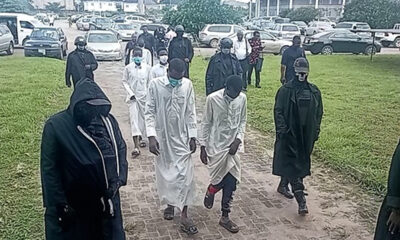
“Recent prosecutions involving persons accused of terrorism have equally raised important questions. It has been observed that some individuals from the South-East who had been detained for several years were prosecuted alongside Boko Haram suspects accused of devastating terrorist activities. These developments have understandably generated anxiety, particularly where the factual circumstances surrounding individual cases appear materially different.
“Consequent upon their appearance before the Federal High Court, Abuja, I personally undertook an independent examination of both the charges and the accompanying Proof of Evidence. To my utmost consternation, I discovered that the charges preferred against the majority of these young Igbo men, who had already languished in detention for almost a decade, were predicated principally upon allegations of IPOB membership and payment of dues.
“Even more alarming was the revelation that many of them were allegedly induced or pressured into entering guilty pleas, following which they were summarily convicted and sentenced to terms of imprisonment ranging from 20 to 40 years. These convictions, if accurately represented, raise profound constitutional concerns regarding the guarantees of due process, including the right to a full, fair and public hearing before a court of competent jurisdiction.
“Those who have committed recognisable criminal offences should unquestionably face prosecution before competent courts of law and, if convicted after a fair trial, bear the full consequences prescribed by law.
“Conversely, those whose continued incarceration rests primarily upon disputed assumptions, insufficient evidence or mere association deserve an impartial review consistent with the Constitution, the principles of natural justice and Nigeria’s international human rights obligations.
“The deterioration of security assumed even more alarming proportions following the extraordinary rendition of Nnamdi Kanu and the subsequent developments within the broader Biafra agitation.
“The emergence of competing voices, particularly that of Simon Ekpa, claiming authority over the movement, further complicated an already volatile situation and coincided with one of the darkest periods experienced in the South-East since the end of the Nigerian Civil War.”
Related